
Yamate

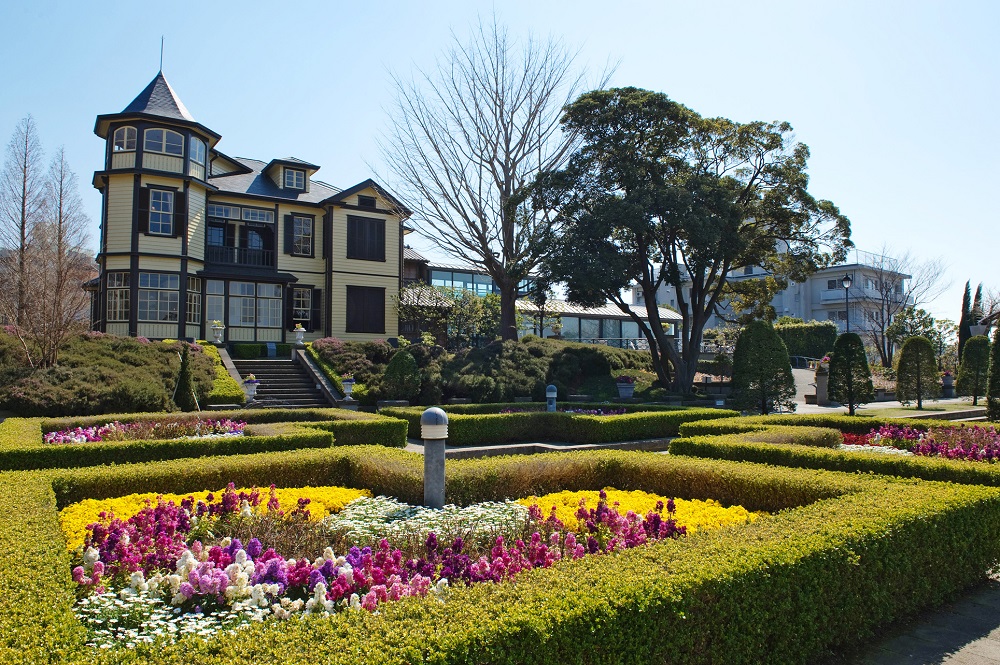
Yamate, known colloquially in English as “The Bluff,” represents one of Japan’s most distinctive and historically significant neighborhoods—a living testament to the dramatic collision between Japan’s isolation and its forced modernization during the 19th century.
This hillside district, perched above Yokohama’s harbor, evokes a palpable sense of stepping into a European or American village transported to Japan. Preserved Victorian mansions, tree-lined streets, international schools, historic churches, and meticulously maintained gardens create an atmosphere altogether unique within Japan—a carefully preserved capsule of the cosmopolitan international community that flourished when Japan first opened its doors to the world.
Yamate tells the story of Japan’s transformation from an isolated feudal nation to a modern, internationally-engaged society. Every building, street, and garden in this neighborhood embodies this pivotal historical moment. Unlike many historic districts that celebrate Japan’s traditional culture, Yamate celebrates the complex, multicultural moment when Western influence fundamentally altered Japanese society and culture.
For contemporary visitors, Yamate offers something increasingly rare: an authentic glimpse into an earlier era preserved not as museum artifice but as an actual, inhabited neighborhood. Residents, international students, families, and cultural institutions coexist with tourists exploring heritage sites, creating a living community rather than a sterile heritage zone. This authenticity distinguishes Yamate from purely commercialized historic districts—it remains, fundamentally, the place where people live, work, and build their futures.
Historical Foundation: Japan’s Opening & Yokohama’s Birth
The Treaty of Kanagawa & Forced Opening (1853–1859)
For over two centuries, Japan maintained deliberate isolation from the Western world—a policy known as sakoku (closed country). The Tokugawa shogunate restricted international contact to limited Chinese and Dutch traders confined to Nagasaki. This extraordinary isolation ended abruptly and traumatically in 1853 when Commodore Matthew Perry of the United States Navy sailed into Tokyo Bay commanding a squadron of “black ships.” Perry bore a letter from President Millard Fillmore demanding that Japan open its ports to American trade and provide coaling stations for steamships traveling to China.
The Japanese were utterly unprepared. No military force could resist Perry’s superior technology. After negotiations, the Treaty of Kanagawa was signed in March 1854, fundamentally altering Japan’s trajectory. While initial concessions were limited, within five years the more comprehensive Harris Treaty of 1858 formally opened Japan to Western trade at five ports, including Yokohama.
When Yokohama officially opened for foreign trade on July 1, 1859, it was a small fishing village of approximately 3,000 residents. The arrival of foreign traders, diplomats, and settlers transformed the village overnight into an international trading center. Chinese merchants arrived alongside Americans, British, Dutch, Germans, Russians, French, and representatives of numerous other nations. Within a decade, Yokohama had become Japan’s primary international port and gateway to Tokyo.
The Foreigner’s Settlement: Initial Konanieto Confines (1859–1862)
Initial Japanese regulations confined foreign residents to the lowland Kannai district immediately adjacent to the harbor. This was a deliberate containment strategy—Japanese authorities sought to minimize Western influence and maintain cultural separation. The Kannai settlement became densely packed as foreign merchants, traders, and diplomatic personnel crowded into the limited space. Warehouses, shops, trading houses, and residences competed for valuable waterfront real estate.
The overcrowding and unsanitary conditions of Kannai quickly became apparent. Foreign residents complained of poor drainage, epidemic diseases, and inadequate space. Simultaneously, as foreign commerce expanded dramatically, the need for additional space became urgent. Yokohama’s rulers gradually recognized that containing the foreign community was both impossible and economically counterproductive.
The Ascent to Yamate: The Bluff’s Ascension (1862 Onwards)
In 1862, Japanese authorities granted permission for foreigners to expand into the elevated Yamate district, referred to by English-speaking residents as “The Bluff.” This hillside location overlooked the harbor, providing commanding views of commercial activity while physically separating the foreign community from the Japanese populace below. The elevation held strategic significance—it offered defensibility while maintaining visual oversight of the harbor and surrounding landscape.
The first significant structure erected on the Bluff was the residence of Sir Rutherford Alcock, the British Consul-General. Alcock’s residence signaled Britain’s commitment to maintaining diplomatic and commercial primacy in Yokohama. Soon, military garrisons followed. Between 1864 and 1875, significant British military forces occupied the Bluff’s crest, defending British diplomatic interests and establishing a protective perimeter around the British Consulate.
The military presence created security that encouraged residential construction. Prosperous foreign merchants, diplomats, and traders began acquiring land and building elegant Western-style residences. These were not modest structures but substantial homes reflecting European and American architectural styles—Victorian villas, Colonial mansions, Classical estates—announcing the residents’ status and cultural identity through architectural expression.
Colonial Opulence: The Height of Foreign Influence (1870s–1923)
By the 1870s and 1880s, Yamate had transformed into an exclusive residential enclave for the international elite. The district’s tree-lined streets accommodated increasingly magnificent homes: Victorian mansions with gabled roofs, Classical villas with columned porticoes, Mediterranean estates with terracotta tile roofing. These architectural styles, imported wholesale from Europe and North America, stood in stark contrast to traditional Japanese architectural principles.
The street names reflected the district’s international character. Foreign investors named streets after their home countries and cities: Britain Street, France Street, Germany Street. Social institutions emerged to serve the expatriate community’s cultural and recreational needs: Saint Maur International School (founded 1872), the Yokohama Country Club (founded 1867), tennis courts, and sports clubs. Multiple religious institutions appeared—not only the Anglican Christ Church but also Catholic chapels and other denominational structures serving diverse religious communities.
Socially, Yamate became the residential heart of Yokohama’s foreign aristocracy. Diplomatic functions, commercial negotiations, and social gatherings took place in grand drawing rooms overlooking the harbor. The international community created a parallel society—economically integrated with Japan through trading interests, yet culturally and socially isolated within their foreign enclave. This duality was the defining characteristic of Yamate’s golden era.
The Great Kantō Earthquake: Destruction & Reconstruction (1923)
The morning of September 1, 1923, brought catastrophe. The Great Kantō Earthquake, one of history’s deadliest seismic events, devastated Tokyo and the surrounding Kanto region. Yokohama suffered particularly severe damage—fires sparked by ruptured gas lines consumed vast areas of the city. The death toll exceeded 140,000 across the region, with thousands dying in Yokohama alone.
Yamate’s historic structures, built with the architectural conventions of their respective eras, suffered devastating damage. Brick and stone buildings collapsed or required demolition. Wooden structures burned or were destroyed. Many of Yamate’s most significant buildings from the 1870s–1900s era were lost forever. The surviving structures required extensive reconstruction, often utilizing more modern, earthquake-resistant building techniques.
The earthquake proved a watershed moment. Some foreign residents evacuated to Japan’s interior or departed the country entirely, concerned about seismic hazards. Japanese society, having endured the disaster, developed renewed confidence in national identity and capacity. The period of greatest Western cultural dominance in Yamate began to wane.
However, the post-earthquake reconstruction also produced extraordinary architectural accomplishments. Visionary architects—both foreign and Japanese—designed replacement structures incorporating modern earthquake-resistant engineering with continued aesthetic sophistication. The buildings that survive in Yamate today are predominantly post-1923 constructions, representing the apotheosis of international style applied to Yokohama’s rebuilt landscape.
The End of Foreign Settlement & International Yamate (1899–1944)
The Treaty of 1899 formally ended the system of foreign settlements, granting Japanese sovereignty over all territory and ending the legal distinction between foreign and Japanese residential areas. While legally formalized in 1899, the cultural distinctiveness of Yamate persisted well beyond the settlement period’s formal conclusion.
The rise of Japanese military nationalism, expansion into China (1937), and eventually World War II fundamentally altered Yamate’s character. American and British residents faced increasing xenophobia and eventual internment. American bombing raids targeted Yokohama’s industrial areas, and Yamate—though less damaged than industrial districts—suffered fire damage and destruction. The world that had created Yamate’s distinctive character fragmented under the pressures of global conflict.
Post-War American Occupation & Contemporary Evolution (1945–Present)
Following Japan’s surrender in August 1945, American occupation forces occupied Yamate, utilizing certain buildings for administrative purposes. International families returned gradually, and Yamate began recovering its cosmopolitan character. However, the district never fully recovered the dominance it had possessed before the 1923 earthquake and World War II.
The 1970s and 1980s brought renewed appreciation for Yamate’s historical significance. City planners and cultural preservationists recognized that the district represented irreplaceable architectural and cultural heritage. Systematic preservation initiatives began—restoring historic buildings, documenting architectural history, and developing cultural programming. International schools re-established significant presence, and foreign residents returned, creating a revitalized international community.
Today, Yamate remains fundamentally what it has been since 1862: an international residential enclave reflecting multiple architectural traditions, inhabited by foreign-origin families, international school students, and Japanese residents appreciating the district’s cultural distinctiveness. The neighborhood’s authentic, lived-in character distinguishes it from heritage zones created purely for tourism.
Getting There & Practical Access
Primary Stations
The Yamate district is accessible from two primary train stations, each serving different areas and itineraries.
Motomachi-Chūkagai Station (Minatomirai Line)
- Distance from district: Serves the northern boundary of Yamate
- Journey from Yokohama Station: Approximately 8 minutes, ¥230 fare
- Advantages: Direct access to Harbor View Park, Motomachi Shopping Street, and northern historic sites
- Best for: Visitors starting exploration from northern attractions (British House, Harbor View Park, Christ Church)
Ishikawacho Station (JR Negishi Line)
- Distance from district: Serves the southern/western boundary of Yamate
- Journey from Yokohama Station: Approximately 7 minutes, ¥170 fare
- Advantages: Proximity to Yamate Museum, Tin Toy Museum, Yamate Italian Garden, and southern historic sites
- Best for: Visitors starting from Italian Garden and exploring downhill toward Harbor View Park
Yamate Station (JR Negishi Line)
- Usage: Primarily serves Negishi Forest Park Racecourse area; less central to primary Yamate attractions
- Not recommended for main heritage district exploration
Recommended Route Strategy
Visitors planning comprehensive district exploration should consider the topography. Yamate occupies hillside terrain with elevation changes. The most efficient itinerary descends rather than ascends repeatedly:
Optimal Strategy: Begin exploration from Ishikawacho Station near the Italian Garden (elevated location), then walk downhill visiting southern/central sites, eventually reaching Harbor View Park at the northern boundary. Conclude at Motomachi-Chūkagai Station, avoiding repeated climbing.
Alternative Transportation: Akai-Kutsa Loop Bus
The Akaikutsu Loop Bus, a distinctive red sightseeing bus system, connects Yamate with other Yokohama attractions.
Details:
- Flat Fare: ¥220 per ride
- Day Pass: ¥600 allows unlimited all-day usage
- Coverage: Multiple routes (A, B, C) serve different districts; verify which route covers desired destinations
- Advantages: Eliminates walking/climbing; provides overview of Yokohama geography; stops at major attractions
- Disadvantages: May sacrifice detailed exploration; less intimate than walking
From Tokyo
The most common approach involves traveling from central Tokyo:
Route 1 (Direct):
- Take JR Keihin-Tohoku Line from Tokyo Station directly to Yokohama Station (approximately 30 minutes)
- Transfer to Negishi Line toward Ishikawacho or Motomachi-Chūkagai Station
- Total journey: 45–60 minutes from Tokyo
Route 2 (Scenic):
- Take any Tokyo-bound line to Sakuragicho Station (approximately 45 minutes)
- Walk 20–25 minutes to Yamate, providing neighborhood overview
Route 3 (Economic):
- Various discount passes (Suica, Pasmo, etc.) offer savings for multiple Yokohama visits
- Tokyo day-trip passes sometimes include Yokohama transportation
Major Attractions: A District-by-District Overview
Northern Yamate: Harbor View Park & The Diplomatic Quarter
Harbor View Park (港の見える丘公園)
Harbor View Park is the symbol of the Yamate area, offering panoramic views of the Port of Yokohama and the Yokohama Bay Bridge.
Overview: This expansive park occupies the crest of Yamate’s northern boundary, the former location of the British military garrison established in 1864. The garrison that once protected British diplomatic interests has been transformed into an elegant public garden offering unobstructed harbor vistas and cultivated European-style gardens.
Key Features:
- Observation Point: A designated viewing area provides commanding 360-degree perspectives—northward toward Tokyo Bay, southward across the harbor, and eastward toward the Minato Mirai 21 district’s modern high-rises. The juxtaposition of historic architecture in the foreground against contemporary skyscrapers in the distant background creates a visual metaphor for Yokohama’s evolution.
- English Rose Garden: The park features a dedicated rose garden cultivated to evoke British formal gardens. The rose beds are seasonal (peak blooming June and November), but even outside blooming season the carefully designed landscape provides aesthetic pleasure. The garden’s design reflects Victorian horticultural sensibilities, imported directly from 19th-century Britain.
- Walking Paths: Multiple walking paths traverse the park’s grounds, offering varied perspectives and photographic opportunities. Paths lead through wooded areas, across open gardens, and to various viewing platforms.
- Historic Artifacts: The park preserves remnants of the former British garrison—original structures or archaeological remains documenting military occupation.
- Admission: Free and open daily during daylight hours
- Best Visiting Times: Early morning (to avoid crowds and capture optimal photography), golden hour (late afternoon when light bathes historic structures beautifully), or after sunset when Yokohama’s harbor lights illuminate the darkness
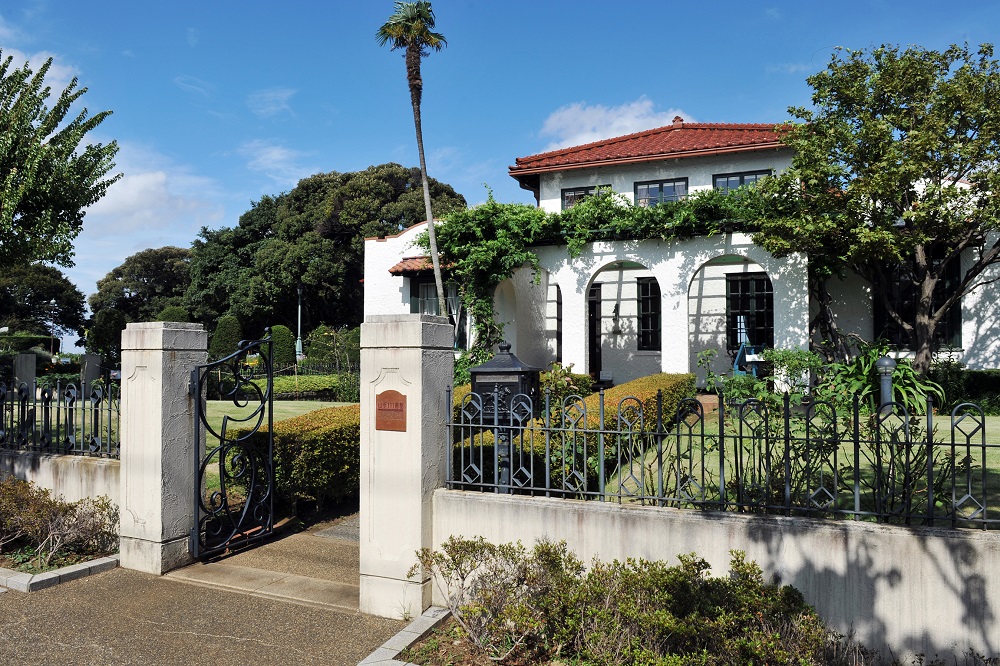
Bluff No. 111 (Yamate 111-bankan)
Bluff No. 111 (Yamate 111) was designed by American architect Jay Hill Morgan and features a large entrance hall and atrium with a glittering chandelier.
Details:
- Construction: Original design by American architect Jay Hill Morgan, among Yokohama’s most prolific foreign architects
- History: Served multiple purposes over its existence, representing the evolution of foreign residential architecture post-1923 earthquake
- Current Status: City-owned and open to public as cultural institution
- Hours: 9:30 AM–5:00 PM
- Closed: Second Wednesday of each month and New Year holidays (December 29–January 3)
- Admission: Free
- Interior Highlights: The grand entrance hall embodies Edwardian grandeur—soaring ceilings, ornamental chandeliers, period furnishings capturing early 20th-century elegance
British House (Former British Consul-General’s Residence)
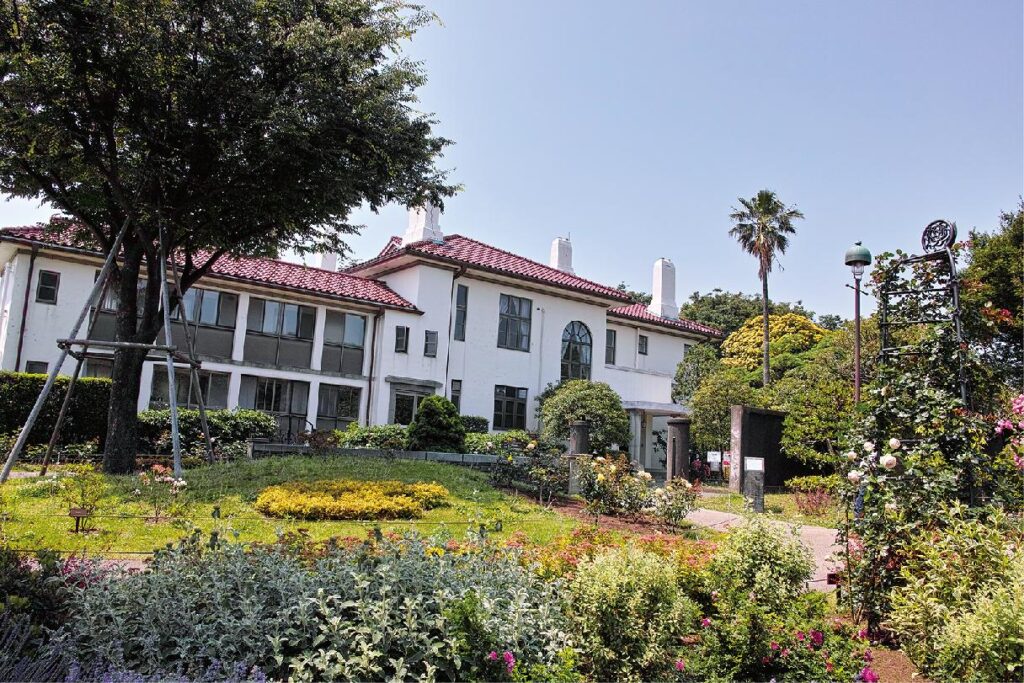
Located at the edge of Harbor View Park overlooking the harbor entrance, this elegant British Colonial-style residence dates to the 1930s post-earthquake reconstruction period.
Details:
- Architecture: Exemplifies British Colonial style adapted to Yokohama’s subtropical climate—large windows for ventilation, verandas for outdoor cooling, and European comfort standards
- Interior: Carefully preserved period furnishings, artwork, and décor reflecting diplomatic residence standards
- Grounds: Manicured gardens providing waterfront views
- Admission: Free
- Hours: Typically 9:30 AM–5:00 PM (verify before visiting)
- Unique Feature: Afternoon tea service available in certain seasons; contact ahead to confirm
Central Yamate: Cultural & Religious Heritage
Yokohama Christ Church (横浜キリスト教会)
Christ Church is an historic Anglican church originally dating from 1901.
Historical Trajectory:
The continuous church presence in Yokohama extends back to 1859, when the first foreign chaplain arrived to serve the diplomatic community. The first Christ Church building was constructed on the current site in 1901, a red brick structure designed by famous British architect Josiah Conder. This original building was completely destroyed in the 1923 earthquake.
The current building was constructed in 1931 and designed by American architect Jay Hill Morgan in a traditional Anglo-Norman style.
Architecture:
- Style: Anglo-Norman ecclesiastical design—stepped stone facades, crenellated towers, and Gothic-influenced windows
- Materials: Stone construction reflecting post-earthquake earthquake-resistant building standards
- Interior: Traditional Anglican sanctuary with organ, stained glass, and period hymnals
- Grounds: Peaceful churchyard with mature trees and historical markers
Visiting:
- Denomination: Anglican Church of Japan (Nippon Sei Ko Kai)
- Open to Visitors: Generally open to the public during daylight hours; inquire about service times
- Worship Services: Sunday services in both Japanese and English; check schedule before attending
- Donation: Small suggested donations welcome for building maintenance
- Atmosphere: Described by visitors as peaceful, welcoming, and deeply contemplative
- Photography: Generally permitted outside worship services
Yokohama Foreign General Cemetery (横浜外国人墓地)
The presence of this cemetery, dating to 1854, reveals a profound historical truth: Western influence in Japan began not with merchants or diplomats, but with death.
Origins & Historical Significance:
The Yokohama Foreign General Cemetery was established in 1854 when a sailor, Robert Williams, on Commodore Perry’s flagship The Mississippi, died after a fall. Permission was requested from Japanese shogunal authorities to bury the sailor onshore and provide a resting place for future Americans dying in Japan.
Permission was granted, and part of the grounds of Zotokuin Temple were designated for this purpose. The cemetery thus represents a formal acknowledgment by Japanese authorities that sustained Western presence in Japan had begun.
Scale & Significance:
The cemetery contains approximately 4,200 graves inscribed with 5,000 names, representing foreign residents from over 40 countries. The extraordinary international diversity—American, British, French, German, Chinese, Russian, and numerous other nationalities—embodies the cosmopolitan nature of Yokohama’s foreign community.
Notable Burials:
The cemetery contains graves of historically significant individuals:
- Diplomats who negotiated treaties shaping Japan’s international relations
- Merchants who established the first foreign trading houses
- Sailors and soldiers who died in service to their nations
- Artists, musicians, and cultural figures who contributed to East-West cultural exchange
- Family members of famous historical figures
Cemetery Character:
Walking through the cemetery reveals profound stories. The inscriptions often offer interesting glimpses into the lives of the interred—some gravestones are weathered and barely legible, others meticulously maintained by descendants or national organizations. The cemetery embodies the intersection of individual lives and grand historical forces. Many graves commemorate individuals who died tragically—from disease, accidents, military conflict, or simply the perils of living in a foreign land during the 19th century.
Access & Regulations:
- Location: Northwest of Bluff No. 111; approximately 5-minute walk through quiet residential streets
- Normally Closed: The cemetery is primarily closed to protect graves and preserve the contemplative atmosphere
- Open Days: The cemetery has designated open days when visitors can take a ten-minute tour with English pamphlet showing historically significant graves
- Gate House Museum: A small museum at the cemetery entrance displays photographs of historically significant graves and exhibits about Yokohama’s early foreign history
- Special Visits: Contact Yokohama’s tourism office in advance to arrange cemetery access; guided tours with knowledgeable docents often available
Emotional Experience: Visitors consistently describe cemetery visits as emotionally profound. The graves represent real individuals—children who died far from home, people separated from their families by distance and circumstance, pioneers who sacrificed for commercial opportunity or diplomatic service. The cemetery exists as a reminder that Yokohama’s international history involved genuine human cost and sacrifice.
Southern Yamate: Architectural Heritage & Gardens
Yamate Italian Garden (横浜山手イタリア庭園)
This is a small, well-kept park with a fountain and several Italian-style flower beds, from which you can enjoy a beautiful view of the city given its hilly position.
Background: The garden was designed to commemorate Yokohama’s international character and historical connections with Italy. The formal Italian garden style reflects 19th-century European aesthetic principles applied to Japanese soil.
Features:
- Formal Garden Design: Geometric flower beds arranged symmetrically around a central fountain
- Italian-Style Statuary & Decorative Elements: Sculptures and architectural features evoking Mediterranean aesthetic
- City Views: Elevated position offers beautiful Yokohama cityscape views
- Horticultural Display: Seasonal plantings—spring flowers, summer roses, autumn foliage, winter evergreens
- Seating Areas: Multiple benches providing rest and contemplation opportunities
Admission: Free
Hours: Generally open during daylight; verify current hours before visiting
Yamate Tennis Court & Tennis Museum
This park is known as the birthplace of tennis in Japan, as the first nationwide match was played here. Inside the park you will find several historic western-style buildings, one of which houses a tennis museum.
Historical Significance: When tennis arrived in Japan as an exotic foreign sport in the late 19th century, Yamate’s international community enthusiastically embraced the pastime. Tennis became a defining social activity among foreign residents, and the sport eventually spread to Japanese society.
Tennis Museum:
- Focus: Exhibits trace tennis history in Japan from 19th-century introduction through modern competitive era
- Collections: Vintage equipment, historical photographs, period clothing, and equipment demonstrating sport’s evolution
- Hours: 10:00 AM–5:00 PM
- Admission: Free
- Photography: Generally permitted
Contemporary Tennis Facilities:
- Operating Courts: The park contains approximately 12 tennis courts, partly public and partly owned by the Yokohama International Tennis Community (YITC)
- Public Usage: Some courts available for public rental; inquire at facility management
- Reservations: Advance booking recommended, particularly for premium courts
Ehrismann Residence (エリスマン邸)
The Ehrismann Residence was designed by Antonin Raymond and built in 1927.
Historical Context:
Constructed in the immediate post-earthquake reconstruction era, this residence represents the apotheosis of early 20th-century international architecture—sophisticated modern design principles applied with artistic sophistication. Antonin Raymond was among the era’s most celebrated international architects, having worked with Frank Lloyd Wright and developed a distinctive modernist aesthetic.
Architecture:
- Style: Early Modernism with geometric precision and elegant simplicity
- Materials: Contemporary construction materials reflecting post-earthquake engineering advances
- Design Philosophy: Rejection of ornamental Victorian excess in favor of functional, streamlined aesthetic
- Interior: Original furnishings and architectural details preserved
Admission: Free
Hours: Typically 9:30 AM–5:00 PM (verify before visiting)
Café: The building houses a café offering tea, coffee, and light refreshments in a refined atmosphere
Berrick Hall (ベリック・ホール)
Berrick Hall was designed by Jay H. Morgan and built in 1930 as the residence of a British trading merchant.
Description: An imposing Spanish Villa-style residence reflecting the eclecticism of Yamate’s architectural diversity. While Victorian Gothic and Colonial styles dominated earlier construction, 1920s–1930s architecture demonstrated experimentation with diverse international styles.
Characteristics:
- Architectural Style: Spanish Colonial Revival with terracotta tile roofing, white-washed walls, and Mediterranean-influenced design
- Scale: Among Yamate’s most substantial residences
- Grounds: Manicured gardens and outdoor spaces reflecting Mediterranean aesthetic principles
- Current Status: Operates as cultural facility or event venue; inquire about visiting opportunities
Bluff No. 18 House
This building was originally built after the Great Kanto Earthquake as the residence of an Australian merchant. After the war it became the property of the Catholic diocese of Yokohama and was used as the priest’s residence until 1991. In that year the building was dismantled from its previous position and moved to where it is now, in front of the Italian Garden of Yamate.
Notable Feature: The relocation of an entire building in 1991 demonstrates extraordinary commitment to preservation—rather than demolishing the structure, preservationists carefully disassembled and reconstructed it at a new location.
Bluff No. 234 (Yamate 234-bankan)
Bluff No. 234 is an apartment building with four households built in 1927. It was built for the foreign people after the Great Kanto Earthquake of 1923.
Significance: This building represents adaptation to post-earthquake circumstances. Rather than individual mansions, smaller apartment units accommodated the foreign community more efficiently. The building design maintained Western comfort standards while acknowledging reduced space.
Diplomat’s House (Bluff 18 House/ベリック・ホール隣)
The Diplomat’s House (1910) was designed for Japanese Ambassador Sadatsuchi Uchida by American architect James McDonald Gardiner, and is located adjacent to the Italian Garden Park.
Distinction: This residence represents a significant historical development—Japanese diplomatic officials themselves began residing in Yamate, signifying increased integration between foreign and Japanese communities. Earlier Yamate had been exclusively foreign; over time Japanese government officials and wealthy merchants joined the international community.
Architecture: Victorian style reflecting Western diplomatic standards, adapted to Yokohama’s climate and site characteristics.
Café: Adjacent to the house there is a café (Bluff Garden Café) offering refreshments in a refined atmosphere
Eastern Yamate: Additional Heritage Sites
Yamate Museum (山手資料館)
Yamate Museum is located a minute’s walk south of Yamate Jyubankan. Built in 1909, it is the only remaining Western-style wooden building in Yokohama. Inside are exhibits related to Yamate’s history between the mid-19th century and the Great Kanto Earthquake of 1923.
Significance: This building’s survival is remarkable. Most Western-style wooden buildings from the Meiji era were demolished or destroyed. This structure’s preservation offers tangible connection to pre-earthquake Yamate aesthetic.
Collections:
- Photographs: Historical photographs documenting foreign settlement, architecture, daily life, and community activities
- Artifacts: Period furnishings, clothing, personal items, and household goods revealing expatriate lifestyle details
- Ephemera: Maps, documents, business records, and written materials recording the foreign community’s activities
- Architectural Documentation: Drawings and plans of historic buildings, many subsequently destroyed
Hours: Open from 11:00 AM to 4:00 PM
Closed: Mondays and New Year holidays (December 30–January 1)
Admission: Free
Photography: Generally permitted in most areas (verify with staff)
Yokohama Museum of Tin Toys (ブリキのおもちゃ博物館)
The Tin Toy Museum is located about 100 meters southeast of Yamate Museum. It is a Japanese collector’s private museum housing about 3,000 tin toys made in Japan from the 1890s to 1960s.
(See detailed Tin Toy Museum guide for comprehensive information)
Sacred Heart Cathedral (聖心大聖堂)
Built in 1933, this imposing red-brick Catholic cathedral serves as the seat of the Roman Catholic Diocese of Yokohama. The cathedral’s architecture reflects post-earthquake reconstruction, embodying modern ecclesiastical design principles while maintaining spiritual gravitas.
Details:
- Denomination: Roman Catholic
- Architectural Style: Neo-Gothic ecclesiastical design
- Interior: Traditional cathedral sanctuary with organ, religious artwork, and stained glass
- Grounds: Landscaped cathedral grounds providing contemplative environment
- Worship Services: Regular masses in both Japanese and English
- Visitor Status: Generally open to the public; inquire about service times before visiting
- Photography: Usually permitted outside active worship services
Other Residential Architecture
Yamate encompasses numerous additional residential structures, both privately occupied and converted to alternative uses (galleries, restaurants, offices). While not all are open to public, walking streets and observing exteriors provides appreciation for architectural diversity.
Dining & Cafés: Experiencing Yamate’s International Hospitality
Yamate’s historic buildings often house cafés, restaurants, and tea rooms offering refined dining experiences within preserved heritage environments. These establishments range from casual tea service to formal afternoon tea to contemporary cuisine.
Historic Building Cafés
Bluff Garden Café (Diplomat’s House)
- Specialty: Tea, coffee, light refreshments
- Ambiance: Refined Victorian atmosphere within restored diplomatic residence
- Tea Service: Afternoon tea service available seasonally
- Hours: Typically 10:00 AM–5:00 PM (verify before visiting)
- Reservations: Recommended for afternoon tea service
Christ Church Café (Various seasonal availability)
- Specialty: Light refreshments, seasonal offerings
- Hours & Availability: Verify current status before visiting
Contemporary Restaurants
Yamate’s location attracts numerous cafés and restaurants serving diverse cuisines. Many establishments capitalize on the neighborhood’s charming aesthetics and international character.
International Cuisine: French bistros, Italian restaurants, German beer halls, and other European-style establishments reflect the district’s continental heritage.
Japanese Cuisine: Contemporary interpretations of Japanese culinary traditions, often refined or contemporary in approach.
Bakeries & Patisseries: European-style bakeries and pastry shops offering fresh-baked goods, reflecting influences from Yamate’s multicultural heritage.
Coffee Culture: Numerous cafés serving specialty coffee drinks, reflecting Japan’s sophisticated coffee culture.
Budget Range: ¥1,000–¥3,000 for casual dining; ¥3,000–¥8,000 for fine dining establishments
Picnicking & Park Dining
Harbor View Park and other district parks welcome picnicking. Many visitors purchase food from nearby Motomachi Shopping Street and enjoy meals overlooking the harbor.
Shopping & Cultural Experiences
Motomachi Shopping Street (元町商店街)
Motomachi Shopping Street runs parallel to the Nakamura River below Yamate and contains approximately 250 shops packed along this short street. The street runs 500 meters and is pedestrian-only on weekends and national holidays from 12:00 to 18:00.
Character: The street still has a certain European feel with a large number of higher-end fashion shops, as well as cafes and restaurants.
Historical Significance: Motomachi Street, developed from early foreign settlement needs, became lined with splendid colonial-style commerce serving the international community.
Shopping Categories:
- Fashion & Accessories: High-end international brands, boutique clothing shops, luxury goods
- Souvenir & Gift Shops: Yokohama-specific merchandise, Japanese crafts, international goods
- Bakeries & Food Shops: Authentic European-style bakeries, specialty food retailers
- Cafés & Restaurants: International cuisine reflecting multicultural heritage
- Antique & Vintage Shops: European antiques, vintage goods, collectibles
Visiting Tips:
- Weekday afternoons offer less crowded shopping experiences
- Pedestrian-only status on weekends creates vibrant street atmosphere but increased congestion
- Convenient location immediately adjacent to Yamate district
Events & Seasonal Highlights
Spring Events (March–May)
Yamate Festa “Hana to Utsuwa no Harmony” (Flowers & Tableware Harmony)
This annual spring event celebrates Yamate’s gardens, architecture, and cultural spaces through flower displays, tableware exhibitions, and special programming throughout the district.
Details:
- Timing: Typically held in late March or early April
- Duration: Usually spans 2–3 weeks
- Scope: Nearly all historic buildings and museums participate
- Activities: Flower displays in historic gardens, tea services, garden tours, exhibitions of fine tableware, and craft demonstrations
- Special Programming: English-language tours, garden talks, and cultural workshops
- Admission: Some events free; some charge modest fees
Appeal: The event celebrates Yamate’s aesthetic sensibilities—the appreciation for nature, beauty, and refined aesthetic expression central to both Japanese and Western cultural traditions.
Photography Opportunities: Abundant—flower displays, architecturally framed compositions, and illuminated evening events create excellent photographic subjects.
Summer Events (June–August)
Yamate International Music Festival (Variable)
Celebrating the district’s international character, this festival features chamber music performances, classical concerts, and world music events held in historic buildings.
Details:
- Venues: Performance venues rotate among district churches, museums, and cultural centers
- Programming: Classical, chamber, and contemporary music reflecting international aesthetic diversity
- Ticket Information: Contact Yokohama cultural office for schedule and ticket availability
- Atmosphere: Intimate concert settings within historic venues create distinctive acoustic and atmospheric experiences
Autumn Events (September–November)
Yamate Walk (Various Dates)
This guided walking tour event invites residents and visitors to explore district neighborhoods, learning about architecture, history, and community heritage.
Characteristics:
- Timing: Autumn offers ideal weather for extended walking exploration
- Organization: Various cultural organizations and municipal agencies organize seasonal walks
- Group Size: Typically 20–40 participants per group
- Leadership: Knowledgeable guide provides historical context and architectural information
- Duration: 2–3 hours typically
- Parking & Start Points: Verify with organizers regarding meeting locations and logistics
Winter Events (December–February)
Christmas Events & Holiday Celebrations
Yamate’s significant Christian community and Western heritage result in prominent Christmas celebrations.
Celebrations Include:
- Christmas Services: Christ Church and other religious institutions hold Christmas Eve and Christmas Day services
- Holiday Decorations: District streets and buildings display Christmas lighting and decorations
- Winter Garden Displays: Historic gardens feature winter flowers and decorative arrangements
- Festive Dining: Restaurants and cafés offer special Christmas-themed menus
- Gift Shopping: Motomachi Street’s shops feature holiday merchandise
Photography Guide: Capturing Yamate’s Essence
Yamate is exceptionally photogenic, with architectural, garden, and landscape subjects throughout the district.
Signature Photo Locations
Harbor View Park:
- Morning Light: Golden hour illuminates harbor and surrounding architecture beautifully; eastern exposure catches early light
- Night Photography: Illuminated Yokohama Bay Bridge and harbor lights create dramatic nighttime compositions
- Panoramic Views: Harbor View Park’s elevated position offers comprehensive cityscape compositions
- Seasonal Variations: Cherry blossoms (spring), roses (summer), autumn foliage, and winter evergreens provide seasonal visual interest
Christ Church:
- Architectural Details: Stone facade details, Gothic windows, and stepped architecture photograph beautifully under varied light conditions
- Surrounding Gardens: Mature trees frame the church structure; autumn foliage creates particularly striking compositions
- Interior: (If accessible) Sanctuary interiors with stained glass and ecclesiastical details offer contemplative compositions
Ehrismann Residence:
- Modernist Lines: Clean geometric lines and contemporary aesthetic provide striking architectural photography
- Garden Setting: Landscaped grounds and architectural integration with nature create interesting compositional opportunities
Italian Garden:
- Formal Design: Geometric flower beds and central fountain provide orderly, composed subjects
- Cityscape Background: Garden’s elevated position offers city views framed by formal plantings
- Seasonal Changes: Rotating plantings provide varied seasonal subjects throughout the year
Yamate Museum & Surrounding Streets:
- Streetscapes: Quiet residential streets lined with historic structures create distinctive neighborhood character
- Architectural Details: Close-up studies of Victorian details, roof lines, entryways, and period elements
- Natural Framing: Mature trees and vegetation naturally frame architectural subjects
Photography Tips & Techniques
Optimal Lighting Conditions:
- Early morning (6:00–9:00 AM) offers clear light and minimal crowds
- Golden hour (4:00–6:00 PM) provides warm light complementing historic brick and stone
- Overcast days offer even lighting advantageous for architectural photography
- Evening/night photography captures illuminated structures and harbor lights
Composition Principles:
- Use foreground vegetation and architectural elements to frame distant harbor views
- Incorporate people/human scale to emphasize building grandeur
- Capture architectural details close-ups revealing construction sophistication
- Exploit natural lines—pathways, building edges, garden beds—creating visual depth
Seasonal Photography:
- Spring: Cherry blossoms (late March–early April) provide delicate natural elements framing historic structures
- Summer: Lush vegetation emphasizes nature-architecture integration; evening light creates dramatic shadows
- Autumn: Foliage colors complement brick and stone architecture; clear weather offers exceptional visibility
- Winter: Spare branches reveal architectural elements otherwise obscured; occasional snow creates rare photographic conditions
Photography Restrictions & Etiquette:
- Some buildings/museums may restrict commercial photography; personal use generally permitted
- Respect private residences—many historic houses remain inhabited; avoid intrusive photography
- Some interior spaces restrict tripods or flash photography; verify policies before beginning
- Be considerate of other visitors; avoid blocking paths or creating disruptions while photographing
Practical Visitor Information
What to Bring
- Comfortable Walking Shoes: Essential for Yamate’s hillside terrain, uneven surfaces, and extended neighborhood exploration
- Camera/Smartphone: For photography and documentation
- Weather-Appropriate Clothing: Layers are advisable as elevation and coastal location create variable conditions
- Umbrella or Rain Jacket: Coastal Yokohama receives precipitation; weather can change quickly
- Sunscreen & Hat: The district offers minimal shade; sun protection is important for extended visits
- Translation App: While many major sites have English signage, residential areas and smaller establishments operate primarily in Japanese
- Map or GPS Device: While main attractions are generally marked, side streets can be confusing; digital navigation helpful
- ¥1,500–¥3,000: For café visits, dining, and potential museum admissions (though many are free)
Accessibility Considerations
Challenges:
- Hillside Topography: The district’s location on an elevated slope means significant walking and climbing
- Narrow Streets: Historic district streets are narrow, sometimes accommodating only pedestrian passage
- Limited Wheelchair Accessibility: Many historic buildings predate accessibility standards; wheelchair access varies
- Parking: Limited accessible parking; public transit strongly recommended
Accommodations:
- Elevator Access: Some buildings feature elevators; verify accessibility before planning routes
- Alternative Routes: Multiple paths through the district offer varied terrain; some flatter than others
- Rest Opportunities: Numerous parks, gardens, and cafés provide rest and recovery locations
- Assistance: Contact Yokohama tourism office regarding specific accessibility needs; staff often knowledgeable about adaptive visit options
Seasonal Visiting Considerations
Spring (March–May):
- Weather: Ideal—mild temperatures (10–20°C / 50–68°F), occasional spring rain
- Crowds: Moderate, particularly during cherry blossom season (late March–early April)
- Appeal: Cherry blossoms framing historic structures create exceptional aesthetic; Hana to Utsuwa festival celebrates gardens and spring beauty
- Recommendation: Excellent time for photography and leisurely exploration
Summer (June–August):
- Weather: Intensely hot and humid (25–32°C / 77–90°F); afternoon thunderstorms possible
- Crowds: Peak tourist season; weekends particularly congested
- Appeal: Summer music festivals, garden displays at peak beauty
- Recommendation: Visit early morning or evening; take advantage of air-conditioned cafés and museums during afternoon heat
Autumn (September–November):
- Weather: Most pleasant season—cool, clear, comfortable (15–25°C / 59–77°F)
- Crowds: Moderate to high, particularly weekends
- Appeal: Clear weather offers exceptional visibility and photography conditions; foliage colors complement architectural aesthetics
- Recommendation: Optimal season for extended neighborhood walking and exploration
Winter (December–February):
- Weather: Cool but manageable (5–15°C / 41–59°F); occasional rain or snow
- Crowds: Lower than other seasons; peaceful atmosphere
- Appeal: Christmas celebrations, winter gardens, festive holiday atmosphere
- Recommendation: Bundle warmly; winter visits offer contemplative, undercrowded experiences
Best Times to Visit
Least Crowded: Weekday mornings (10:00 AM–12:00 PM) during non-peak seasons (February, June, November)
Most Beautiful: Autumn for weather and architectural clarity; spring for floral displays
Most Atmospheric: Early morning when streets are peaceful; evening when buildings are illuminated against darkening sky
Most Culturally Active: Spring (Hana to Utsuwa festival) and summer (music festivals)
Suggested Itineraries
Half-Day Circuit (3–4 hours)
Morning Route (Starting from Motomachi-Chūkagai Station):
- Exit Motomachi-Chūkagai Station (15 min)
- Harbor View Park exploration (45 min)
- Observe harbor views, photograph architecture and gardens
- English rose garden if in season
- British House visit (30 min)
- Tour residence, observe grounds
- Christ Church exploration (20 min)
- Observe exterior architecture, interior if accessible
- Lunch at Motomachi Street (45 min)
- Bakery, café, or restaurant selection
- Return to station via Motomachi Street shopping
Total Duration: Approximately 3.5–4 hours Distance: Approximately 2–3 kilometers of walking Physical Demands: Moderate; involves hillside walking and climbing Museum Stops: 0–1 (Harbor View Park and British House are free/low-cost)
Full-Day Comprehensive Exploration (6–8 hours)
Optimal Route (Descending from South to North):
- Morning: Begin at Ishikawacho Station (15 min)
- Yamate Italian Garden exploration (30 min)
- Photograph formal gardens, observe cityscape views
- Small café refreshment optional
- Yamate Museum visit (45 min)
- Examine pre-1923 photographs and artifacts
- Understand Yamate’s historical development
- Tin Toy Museum (45 min–1.5 hours)
- Browse vintage toy collection
- Toys Club shop exploration
- Bluff Houses (Walking Tour) (1 hour)
- Visit accessible historic buildings (Ehrismann Residence, Berrick Hall, etc.)
- Photograph exterior architecture and gardens
- Stop at various cafés for refreshment
- Lunch (45 min–1 hour)
- Historic building café or Motomachi Street restaurant
- Foreign General Cemetery (30 min)
- (If open day) guided tour and historical exploration
- Afternoon: Harbor View Park & Northern District (1.5 hours)
- English rose garden
- Harbor views and photography
- British House visit
- Christ Church (20 min)
- Exterior architecture and surrounding gardens
- Motomachi Shopping Street (1 hour)
- Retail browsing, souvenir selection
- Evening: Return to Central Yokohama or Dinner (variable)
Total Duration: 6–8 hours Distance: 4–5 kilometers of walking Physical Demands: Moderately strenuous; significant hillside walking Difficulty: Moderate; plan with rest breaks Museum Stops: 3–4 (Yamate Museum, Tin Toy Museum, Ehrismann Residence, British House)
Specialized Interest Itineraries
Architecture Enthusiast (Full Day):
- Focus on building exteriors and interior architectural details
- Visit Yamate Museum for historical building documentation
- Photograph architectural elements systematically by era (pre-1923, 1923–1940s)
- Study stone work, brick patterns, window designs, and decorative details
- Duration: 6–8 hours
Photography-Focused (Full Day or Multiple Visits):
- Multiple visits to capture varied lighting conditions and seasons
- Sunrise at Harbor View Park for golden hour light
- Midday architectural detail photography
- Sunset and evening illumination captures
- Duration: 4+ hours per session; multiple visits recommended
Religious & Cultural Heritage (Half-Day):
- Christ Church and interior sanctuary
- Sacred Heart Cathedral
- Foreign General Cemetery
- Consider timing with worship services for authentic experiences
- Duration: 2–3 hours
Family-Friendly (Half-Day to Full Day):
- Harbor View Park play areas (if available)
- Yamate Museum exhibits appeal to historical interests
- Tin Toy Museum captivates many children
- Motomachi Street shopping and café browsing
- Duration: 3–6 hours depending on children’s interests
Combination with Other Yokohama Attractions
Yamate + Minato Mirai District (Full Day):
- Morning: Yamate neighborhood exploration (3–4 hours)
- Midday: Travel to Minato Mirai district (train or bus)
- Afternoon: Yokohama Cosmo World, Red Brick Warehouse, maritime museum
- Evening: Waterfront dining and return to accommodation
Yamate + Chinatown (Full Day):
- Morning: Yamate exploration (3–4 hours)
- Midday: Travel to Yokohama Chinatown
- Afternoon: Chinatown temples, restaurants, shops
- Evening: Chinatown dining or return to central Yokohama
Yamate + Tokyo Day Trip Integration (Variable):
- Option 1: Tokyo morning, train to Yokohama afternoon, Yamate evening exploration
- Option 2: Yamate morning, midday train to Tokyo, afternoon/evening in Tokyo
- Efficient for Tokyo-based visitors with limited Yokohama time
Neighborhood Etiquette & Respectful Visiting
Yamate remains fundamentally a residential neighborhood, not purely a heritage tourism zone. Many historic buildings are privately occupied or serve institutional functions beyond tourism. Respectful visiting practices are essential.
Guidelines
Residential Properties:
- Many Yamate buildings remain private residences
- Photograph exteriors only; do not trespass onto private grounds
- Avoid photographing residents or invading personal privacy
- Keep noise levels reasonable during walks
Religious Institutions:
- Remove shoes if required before entering churches or religious buildings
- Observe quiet, respectful demeanor during visits
- Photography may be restricted during active worship services
- Dress modestly when visiting places of worship
Open Spaces & Parks:
- Follow park regulations and posted signs
- Dispose of litter properly—leave no trace
- Respect other visitors’ experiences
- Maintain quiet, contemplative atmosphere
Commercial Establishments:
- Patronize cafés and restaurants with intention to purchase
- Respect business hours and policies
- Leave gratuity if providing exceptional service (though not obligatory in Japan)
Photography Ethics:
- Always ask permission before photographing individuals
- Respect privacy and security concerns
- Avoid photographing from private property without permission
- Be considerate of other visitors’ experiences while photographing
Accessibility for Different Visitor Groups
Elderly Visitors & Mobility Considerations
Challenges: Hillside terrain, narrow streets, uneven surfaces
Adaptations:
- Plan shorter walking distances; consider using Akai-Kutsa bus for transportation between sites
- Focus on accessible sites: Harbor View Park (relatively flat), easily-accessible historic buildings
- Schedule morning visits when energy levels are highest
- Take frequent rest breaks at parks and cafés
- Consider hiring local guide for personalized assistance
Recommended Sites for Limited Mobility:
- Harbor View Park (mostly level once accessed)
- British House area
- Motomachi Shopping Street (flat, easy walking)
- Accessible historic buildings with ground-floor entry
Visitors with Children
Considerations: Energy management, entertainment, safety
Recommendations:
- Shorter visit duration (2–3 hours) to maintain children’s engagement
- Include Interactive sites (Tin Toy Museum captivates many children)
- Plan meals at family-friendly establishments
- Use parks for play breaks and energy release
- Choose morning visits to avoid afternoon overstimulation
- Consider stroller appropriateness for neighborhood terrain
Child-Friendly Activities:
- Harbor View Park offers open space and play potential
- Yamate Museum exhibits appeal to historically-curious children
- Tin Toy Museum often fascinates children interested in toys/mechanical items
- Motomachi Street offers shopping and café opportunities
Solo Travelers
Considerations: Navigation, safety, social engagement
Advantages:
- Schedule flexibility allowing leisurely site exploration
- Photography opportunities without time pressure
- Self-directed pace accommodating specific interests
- Lower overall costs compared to group travel
Recommendations:
- Guided walking tours provide navigation assistance and social engagement
- Stay in centrally-located hotels with ready Yamate access
- Download offline maps for navigation confidence
- Join organized group tours at specific sites (historical cemetery tours, music festivals)
International Visitors
Language Considerations:
- Major sites have English signage; residential areas primarily Japanese
- Translation apps helpful for menu reading, signage interpretation
- Guided tours in English available at major sites
- Staff at tourist-oriented establishments often speak English
Cultural Orientation:
- Yamate’s Western architecture and history offer familiarity to international visitors
- International schools and religious institutions reflect multicultural community
- Motomachi Street caters to international visitor comfort
- Food options accommodate diverse dietary preferences
Nearby Regions & Extended Exploration
Adjacent Neighborhoods Worth Visiting
Kannai District (15–20 minute walk or train ride)
The original 1859 foreign settlement area, now a modern commercial/business district but with historic remnants.
Attractions:
- Yokohama Customs House (historic Red Brick building)
- Various heritage temples and shrines
- Modern shopping and dining establishments
- Transitional zone illustrating Yokohama’s evolution from 19th-century trading post to contemporary city
Regional Day Trips from Yamate/Yokohama
Kamakura (50 minutes by train)
Historic temple town featuring Great Buddha and medieval temples, offering alternative perspective on Japanese cultural heritage. Convenient for visitors combining Yamate’s Western heritage with traditional Japanese culture appreciation.
Hakone (60–90 minutes by various transport)
Mountain resort town famous for hot springs, Mount Fuji views, and art museums. Accessible for day trips or overnight stays combining Yokohama coastal experience with mountain scenery.
Kawasaki’s Nihonminkaen (30 minutes by train)
Open-air museum preserving traditional Japanese farmhouses and domestic architecture, providing cultural contrast to Yamate’s Western heritage preservation.
Essential Contact Information & Resources
Tourism Information & Assistance
Yokohama Official Tourism Website: Comprehensive information in English about attractions, events, dining, and accommodations
Yokohama Visitor Information Centers: Located at major stations (Yokohama Station, Sakuragicho Station) offering English-language assistance, maps, and event information
Yamate District-Specific Information: Contact Naka-ku (ward) tourism office for district-specific guidance and current information on historic buildings and events
Useful Websites
- Yokohama Official Tourism: www.yokohama.travel (English available)
- Naka Ward Information: Official ward office with cultural information
- Transportation Planning: Hyperdia.com or Google Maps for train/bus route planning
Conclusion
Yamate represents far more than a collection of historic buildings preserved as museum pieces. Rather, it embodies a crucial historical moment—the tangible, physical manifestation of Japan’s transition from isolated feudal society to modern, internationally-engaged nation. Walking through Yamate’s tree-lined streets, observing Victorian mansions overlooking a port that once mystified Japan’s isolationist rulers, and encountering the international community that persists in this neighborhood creates profound historical perspective.
The district’s authentic, lived-in character—with contemporary residents, ongoing businesses, and evolving cultural institutions—prevents Yamate from becoming a sterile heritage zone. Instead, it remains a genuine community where history continues to unfold. For visitors, this authenticity creates an exceptionally rich experience: history is not confined to museum walls but embedded in actual buildings serving actual purposes, inhabited by actual people engaged in contemporary life.
A comprehensive Yamate visit requires several hours of dedicated exploration. The architectural diversity, historical significance, garden aesthetics, and neighborhood character reward patient, contemplative engagement. Whether you’re captivated by Victorian architecture, international history, garden design, or the intersection of cultures, Yamate delivers profound, multidimensional experiences distinguishing it from typical tourist attractions.
For anyone traveling to Tokyo or Japan interested in understanding the nation’s modernization, international relations, or architectural heritage, Yamate is indispensable. Few places offer such tangible connection to history combined with contemporary vitality and authentic neighborhood character.