
Yamashita Park
Yamashita Park is one of the best known tourist attractions in Yokohama, Japan. Find out more about it.

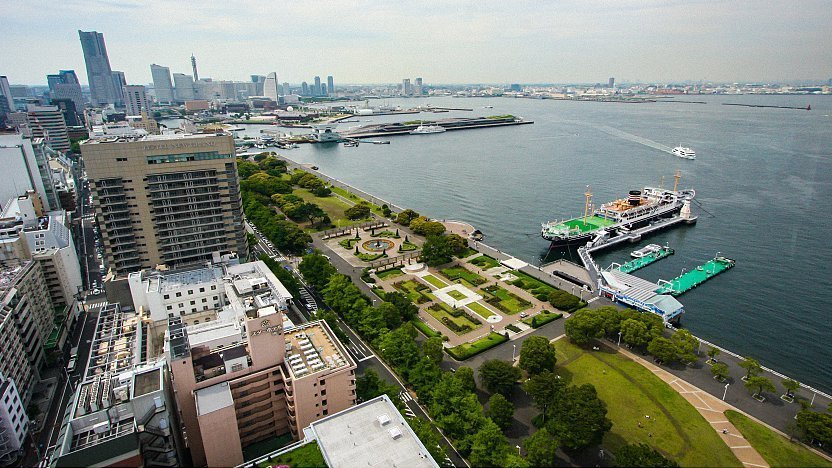
There are many things to do in Yokohama, some cost money, some are for free. After you’ve spent enough time in the museums or shopping, you can relax in Yamashita Park and get a good view of the seaside as well.
Yamashita Park stands as one of Japan’s most iconic waterfront destinations and a powerful symbol of Yokohama’s resilience and spirit. This 7.4-hectare seaside park stretches along Yokohama Bay’s waterfront, offering commanding views of one of Asia’s busiest harbors. What makes this park extraordinary is its origin story: built from the literal rubble of the devastating 1923 Great Kantō Earthquake, Yamashita Park transformed destruction into possibility, reclaiming waterfront land and creating a democratic public space for residents and visitors to enjoy the harbor that has shaped Yokohama’s destiny.
Brief History
From Earthquake Rubble to Public Park (1923–1930)
On September 1, 1923, the Great Kantō Earthquake struck the Tokyo-Yokohama region with catastrophic force, killing over 140,000 people across the region and devastating Yokohama’s waterfront areas. Mountains of debris from collapsed buildings created an immediate crisis—until Scottish civil engineer Marshall Martin proposed a visionary solution: use the earthquake rubble to reclaim waterfront land and create a public park accessible to all residents.
This concept was revolutionary for the 1920s. Most cities prioritized commercial reconstruction, yet Yokohama committed valuable waterfront real estate to public recreation. Over five years, approximately 2.4 million cubic meters of earthquake debris was transported and carefully layered to create stable landfill. On March 15, 1930—exactly seven years after the earthquake—Yamashita Park officially opened, symbolizing Yokohama’s extraordinary resilience and forward-looking vision.

The park quickly gained international recognition as a model of urban reconstruction and progressive city planning. Following World War II and American occupation, the park returned to Japanese municipal management and evolved into a beloved symbol of Yokohama’s identity and connection to the sea.
Main Attractions
The Hikawa Maru: Historic Ocean Liner Museum
The Hikawa Maru is Yamashita Park’s most iconic structure—a beautifully preserved ocean liner that has served as a museum vessel since 1961. Built in 1930 by Mitsubishi Heavy Industries, this elegant ship transported passengers and dignitaries across the Pacific for three decades, serving as a floating ambassador for Japan during the interwar period.
The ship famously hosted passengers including Charlie Chaplin during his 1932 Japan visit and various international dignitaries conducting diplomatic missions. The Hikawa Maru navigated through the transformative 1930s and war years before eventually retiring from active service. Rather than demolition, preservationists advocated for the ship’s retention as a cultural artifact, and she has remained permanently berthed beside Yamashita Park for over 60 years.
Visitors can board the ship to explore beautifully preserved interiors reflecting 1930s elegance. The first-class dining room evokes formal dinners across the Pacific with period furnishings and fine china; the captain’s bridge offers navigation history; and various cabins and salons showcase Art Deco design principles. The ship’s careful preservation reveals the sophistication and craftsmanship of prewar Japanese maritime engineering.
Hours: 10:00 AM–5:00 PM (last entry 4:30 PM) | Closed: Mondays | Admission: ¥600 adults, ¥300 children
Yokohama Marine Tower: Harbor Observatory
Rising 106 meters above Yamashita Park stands the Yokohama Marine Tower, an iconic landmark constructed in 1961 to commemorate the 100th anniversary of Yokohama Port’s opening. The tower symbolizes Japan’s post-war confidence and modernization during the nation’s rapid economic growth period.
The observation decks on floors 29 and 30 provide stunning 360-degree panoramic views of Yokohama Harbor, the Minato Mirai 21 district’s modern skyline, the Yokohama Bay Bridge, and on clear days, Mount Fuji in the distance. A rotating restaurant offers fine dining with continuously changing harbor vistas, while a casual café provides lighter refreshments. The night illumination of the tower itself creates a striking visual landmark visible throughout Yokohama.
Hours: 10:00 AM–6:00 PM (extended to 7:00 PM June–August); nighttime viewing 6:00 PM–10:00 PM | Admission: ¥1,000 daytime, ¥700 nighttime (combination ¥1,400)
Yokohama Port Museum & Nippon Maru Training Ship
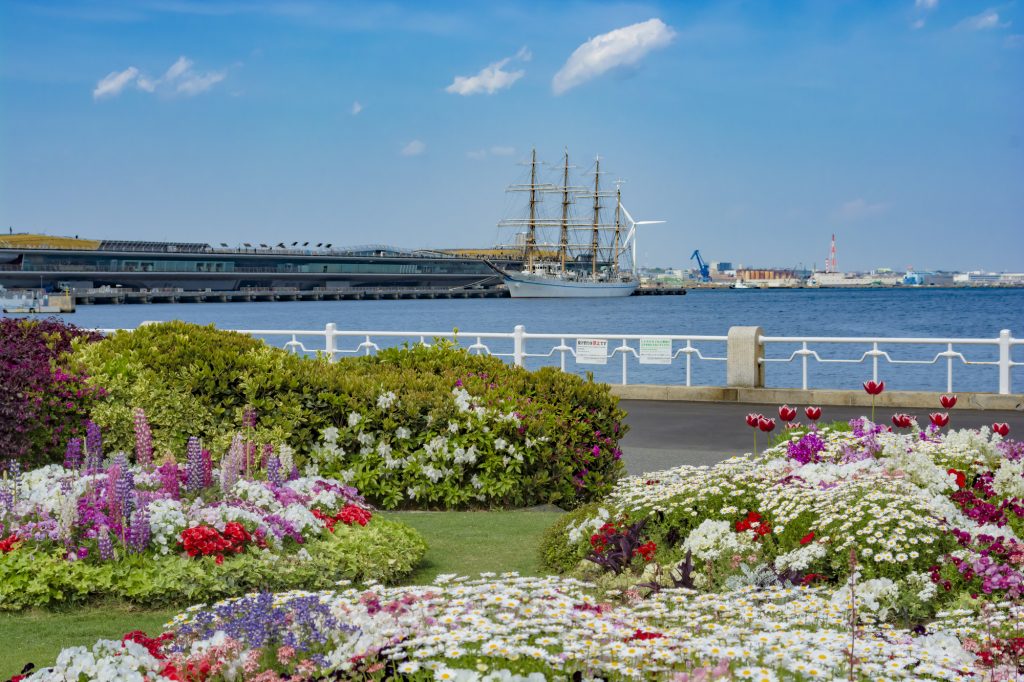
Adjacent to Yamashita Park, this comprehensive maritime museum documents Yokohama’s port history and Japan’s maritime heritage. The museum features the Nippon Maru, a preserved sailing vessel representing Japan’s maritime traditions, alongside extensive exhibitions about containerization, modern port operations, and maritime logistics throughout Japan’s history.
Interactive displays and observation decks allow visitors to understand the harbor’s scale and importance to international commerce. The museum complements the Hikawa Maru by presenting both historical maritime traditions and contemporary port operations.
Hours: 10:00 AM–5:00 PM (last entry 4:30 PM) | Closed: Mondays | Admission: ¥600 adults, ¥250–¥350 children | Combined Tickets: Discounted rates available when combining with Hikawa Maru
Sculptural Features & Park Attractions
Throughout Yamashita Park, numerous sculptures and monuments create visual interest and cultural significance. The most prominent is the Guardian of Water sculpture by renowned American artist Donal Hord, depicting a protective female figure and gifted by San Diego in 1960 to commemorate the sister city relationship. An identical sculpture stands in San Diego, symbolizing artistic friendship between the two port cities.
The park also features the Girl With Red Shoes Statue, a beloved sculpture commemorating a famous Japanese song about a girl departing on a ship—evoking Yokohama’s maritime romance. An Indian Water Fountain honors the local Indian community’s gratitude for Japanese assistance to Indian earthquake survivors in 1923. The San Diego Sister City Bell (1983) and various other monuments commemorate international relationships and cultural heritage.
The park includes the Future Rose Garden (Mirai no Baraen) featuring approximately 2,000 roses of 160 different varieties. Peak bloom times occur in spring (April–May) and autumn (October–November), transforming sections of the park into spectacular floral displays.
Osanbashi Passenger Terminal: Cruise Ship Gateway
The Osanbashi Terminal serves as Yokohama’s primary international cruise ship terminal and architectural landmark. A distinctive feature is a public rooftop walkway offering elevated views of Yokohama Bay and surrounding landscape—free access provides unique perspectives of harbor activity, Mount Fuji (clear days), and the Minato Mirai district. This less-obvious vantage point rewards visitors seeking distinctive photography opportunities and harbor views unavailable from street level.
How to Get There
By Train (Recommended)
Motomachi-Chūkagai Station (Minatomirai Line)
- Distance: 2–5 minute walk to park entrance
- Journey: 8 minutes from Yokohama Station (¥230)
- Best For: Direct access to western park zone
Nihon-Odori Station (Minatomirai Line)
- Distance: 5 minute walk
- Journey: 7 minutes from Yokohama Station (¥230)
- Best For: Access to northern park areas
Kannai Station (JR Negishi Line / Subway)
- Distance: 20 minute walk
- Best For: Those combining downtown attractions
From Tokyo
Take the JR Keihin-Tohoku Line directly from Tokyo Station to Yokohama Station (approximately 30 minutes), then transfer to the Minatomirai Line toward Motomachi-Chūkagai Station (8 minutes). Total journey time: approximately 50 minutes from central Tokyo.
By Water
Sea Bass Water Bus provides direct water-based transportation from Yokohama Station area to Yamashita Park (¥1,000; journey 20–35 minutes), offering a unique approach from the harbor perspective.
Park Information
- Address: 279 Yamashita-cho, Naka-ku, Yokohama 231-0023, Japan
- Hours: Park grounds open 24 hours; individual facilities operate separate hours
- Admission: Free to enter park grounds; individual attractions charge admission
- Best Times: Early morning (peaceful, excellent photography) or evening (romantic waterfront atmosphere)
Nearby Attractions
Red Brick Warehouse (5–10 minute walk)
Located immediately adjacent to Yamashita Park, the historic Red Brick Warehouse complex represents another remarkable restoration of early 20th-century Yokohama architecture. These beautifully preserved brick buildings, originally constructed in 1911–1913 as customs bonded warehouses, were devastated in the 1923 earthquake and meticulously restored in the 1990s.
Today they house shops, restaurants, galleries, and event spaces, creating a vibrant cultural destination where visitors can experience fine dining with harbor views, enjoy craft beers, browse artisan boutiques, or participate in seasonal festivals. The warehouse’s outdoor Event Plaza frequently hosts cultural celebrations and markets.
Motomachi Shopping Street (Immediately Adjacent)
Running parallel to Yamashita Park along the Nakamura River, Motomachi Shopping Street is a charming pedestrian thoroughfare containing approximately 250 shops. The street developed from early foreign settlement commercial needs and maintains a European character with high-end fashion boutiques, international brands, specialty bakeries, cafés, and restaurants.
The street is pedestrian-only on weekends and holidays (12:00–18:00), creating a vibrant shopping atmosphere. Visitors can browse luxury goods, enjoy European-style pastries from renowned bakeries, or stop at numerous cafés for refreshment. The street captures Yokohama’s multicultural heritage through its European aesthetic and cosmopolitan retail mix.
Yokohama Chinatown (10–15 minute walk or short train ride)
Japan’s largest Chinatown district lies within walking distance (or a brief train ride on the Minatomirai Line) from Yamashita Park. This bustling, energetic neighborhood features authentic Chinese restaurants serving regional cuisines, traditional dim sum establishments, fortune tellers, temples, and specialty shops.
Visitors can experience genuine Chinese culinary traditions, browse traditional medicines and crafts, or simply wander atmospheric alleyways. The neighborhood’s vibrant atmosphere, aromatic food, and cultural distinctiveness create a sharp contrast to Yamashita Park’s serene waterfront environment, making it an excellent complement to park visits.
Yokohama Cosmo World & Minato Mirai District (10–15 minute walk or train ride)
The iconic Yokohama Cosmo World amusement park, anchored by the famous Cosmo Clock 21 Ferris wheel, lies within the broader Minato Mirai 21 development district. From Yamashita Park, visitors can walk approximately 15 minutes eastward through the waterfront or take the Minatomirai Line one stop to Minatomirai Station.
The sprawling Minato Mirai district combines modern commercial development, museums, entertainment facilities, and harbor views. The Cosmo Clock 21 Ferris wheel provides elevated 360-degree perspectives of Yokohama and the surrounding landscape. The district represents Yokohama’s contemporary urban evolution and contrasts historically with Yamashita Park’s heritage significance.