
Sankeien Garden

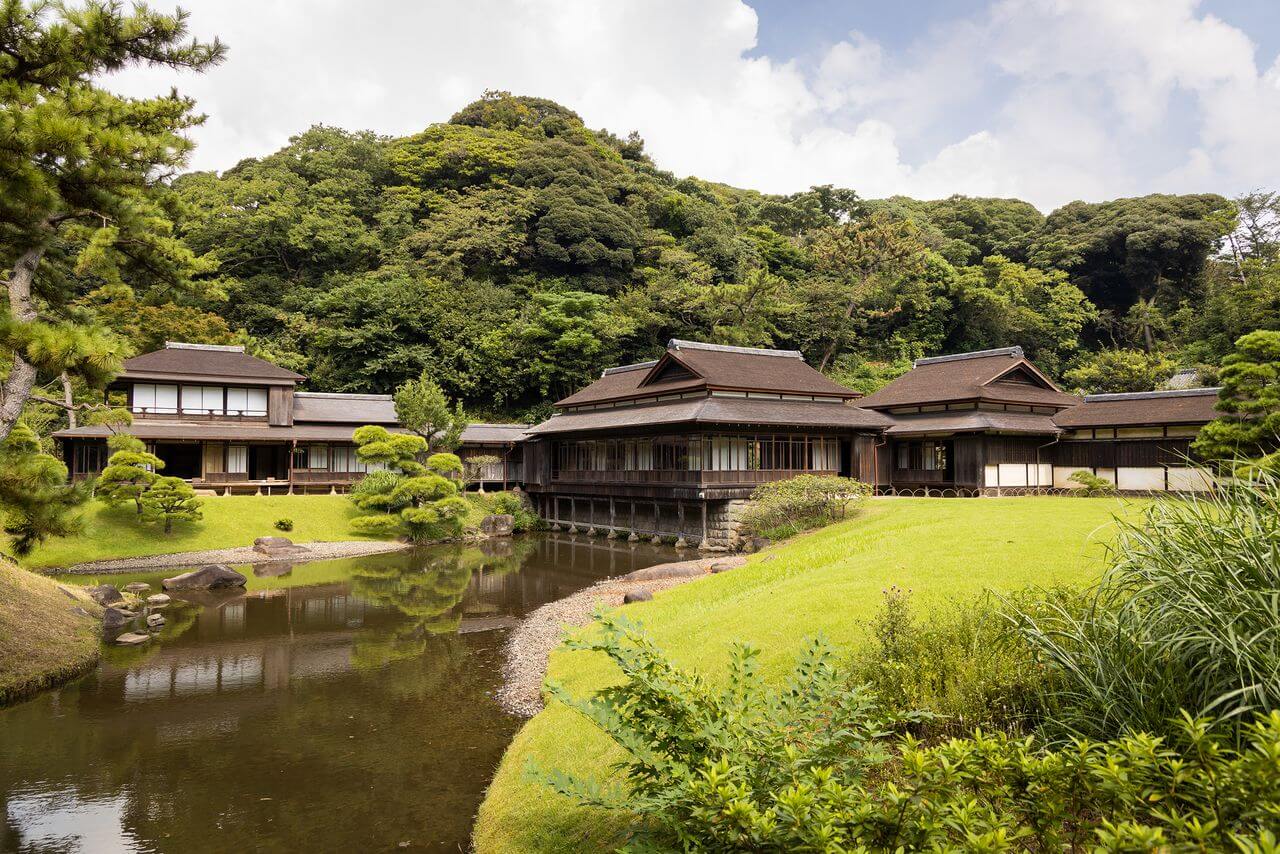
Sankeien is a vast classical Japanese garden covering over 175,000 square meters, renowned for its seasonal beauty. Set in southern Yokohama, this extraordinary garden represents a masterpiece of landscape design and cultural preservation—a remarkable collection of historic buildings relocated from across Japan integrated harmoniously into a natural garden environment. Rather than displaying modern Yokohama’s Western influences, Sankeien offers an escape into traditional Japanese aesthetics and architecture, providing visitors a profound encounter with Japan’s cultural heritage.
The garden’s name, “Sankeien” (三溪園), literally means “Three Creeks Garden,” referencing the water features that flow throughout the landscape. Designated a National Place of Scenic Beauty, it offers a peaceful escape with ponds, streams, winding paths, and vibrant foliage changes year-round. For anyone seeking authentic Japanese garden experience with genuine historical depth, Sankeien stands as Yokohama’s most significant traditional attraction.
Brief History
The Vision of Hara Sankei: Cultural Philanthropy (1902–1922)
The entire garden was once the private home of Tomitaro “Sankei” Hara (1869-1939) an extremely wealthy silk merchant. Hara was not merely a businessman accumulating wealth—he was a visionary philanthropist deeply committed to preserving Japan’s cultural heritage and supporting artists during Japan’s rapid modernization. Beginning in 1902, Hara embarked on an extraordinary 20-year project to create a monumental garden on land inherited from his grandfather.
The garden’s creation required extraordinary resources and vision. Hara systematically acquired historic buildings from across Japan—particularly from Kyoto and Kamakura—and carefully relocated them to Sankeien. Rather than hoarding these treasures as private possessions, Hara remarkably opened the outer garden to the public in 1906, just a few years after beginning construction. This was a remarkable aspect of Sankeien—Hara always intended for the garden to be open to the public during his lifetime. It was usually the case that prominent businessmen’s residential estates became parks or gardens after their deaths, but by 1906, just a few years after starting to create Sankeien, Hara opened most of what is today’s outer garden to the public free of charge.
The garden served a dual purpose: it was both a family residence and a cultural sanctuary fostering artistic creation. Hara had close ties to leading cultural figures of the day, and a large part of the garden’s purpose was to foster the arts. Notably, Rabindranath Tagore (1861–1941), the Indian poet, writer, and social reformer and the first Asian recipient of the Nobel Prize in Literature, spent two and a half months in 1916 in the garden’s Shōfūkaku building and composed his book of poems Stray Birds there.
Devastation and Resilience: 1923 Earthquake & WWII Survival
One year after Sankeien’s completion, the Great Kantō Earthquake struck, nearly destroying Yokohama. Many of the buildings in the garden collapsed. Hara used his wealth to help reconstruct the city. Rather than focusing exclusively on his damaged garden, Hara prioritized helping rebuild Yokohama itself—demonstrating the philanthropic values underlying his cultural endeavors.
The garden boasts a whopping 17 buildings of historical importance, an impressive feat for a site that experienced significant damage during World War II. Following devastating wartime bombardment, the garden underwent comprehensive restoration in the mid-1950s, preserving these irreplaceable structures for contemporary visitors.
Main Attractions
The Three-Story Pagoda: Historic Heart
The most iconic structure within Sankeien is the main hall and three storied pagoda of Kyoto’s old Tomyoji Temple. This pagoda, originally constructed in Kyoto in the mid-1400s, was relocated to Sankei-en in 1914. The pagoda crowns a hilltop within the garden’s inner sections, offering commanding views across the landscape and serving as the garden’s symbolic focal point. The structure represents remarkable preservation of Muromachi-era architecture—a tangible connection to medieval Japanese cultural achievement.
Kakushōkaku: The Hara Family Residence
The house that Hara and his family lived in (Kakushokaku) is huge; a sprawling, flat dwelling with dozens of spacious, interconnected tatami rooms, overlooking a private green lawn. This grand residential structure exemplifies aristocratic domestic architecture and aesthetic principles. Originally part of the inner garden’s private domains, Kakushōkaku represents the refined sensibilities and substantial resources of Hara’s household.
Historic Buildings & Structures
Sankeien’s splendid collection of 17 historic buildings relocated here from places around Japan, including Kyoto and Kamakura, include a three-story pagoda, traditional tea houses, residential houses, and even a temple hall. Ten of the buildings have been designated Important Cultural Properties by the Japanese government, and three more are recognized as Tangible Cultural Properties by the city of Yokohama.
Notable structures include the Former Yanohara House, originally constructed in the remote village of Shirakawa-go in Gifu Prefecture with traditional thatched roof construction. The Gomon Gate came from Kyoto’s Saihōji temple, relocated in the 18th century. The Gekkaden Pavilion, Rinshunkaku villa, and various tea houses (chaya) are distributed throughout the garden, each serving distinct historical and functional purposes.
Tea Houses & Refreshment Facilities
Multiple traditional tea houses are scattered throughout Sankeien, providing refreshment and cultural experience. Sankeien Saryō serves a popular tempura and soba set, and Taishunken is known for its Sankei noodles. These establishments offer opportunity to experience traditional Japanese hospitality while enjoying meals overlooking garden landscapes.
The Sankei Memorial Hall & Museum
Located near the main entrance, this facility houses artwork and exhibits documenting Hara Sankei’s life, the garden’s history, and rotating cultural exhibitions. The museum provides essential context for understanding Hara’s vision and the garden’s cultural significance.
Seasonal Beauty
Sankeien transforms throughout the year, offering distinct aesthetic experiences with each season:
Spring: Cherry blossoms in spring create transient but spectacular floral displays as thousands of petals carpet the pathways and frame historic structures.
Summer: Early-morning lotus blossom viewing in the summer offers particularly beautiful experiences as lotus flowers bloom on the ponds. Green foliage creates lush, verdant atmosphere.
Autumn: Vibrant foliage in autumn, particularly the maples’ transformation to brilliant reds and golds in late November, creates spectacular color displays described as equally stunning to spring cherry blossoms.
Winter: Plum blossoms appear in late winter, and evergreens maintain visual structure while deciduous trees reveal underlying landscape architecture.
How to Get There
By Bus from Yokohama Station
Take the municipal bus (Route No.8 or 148) to the bus station “Honmoku Sankeien Mae”, 5 min. walk to the Garden. Take bus number 8 or 148 from the station’s east exit to Sankeien-Iriguchi (30-35 minutes, 220 yen one way, frequent departures).
By Bus from Negishi Station
From “Negishi Station” (JR Keihin-Tohoku Negishi Line), Bus Platform No.1, take the municipal bus (Route No.58, 99 or 101) to the bus stop “Honmoku”, 10 min. walk to the Garden.
By Bus from Sakuragicho Station
Approximately 20–25 minutes by bus (Routes 8 or 148), followed by a 5-minute walk to the garden entrance.
From Tokyo
Take the JR Keihin-Tohoku Negishi Line from Tokyo Station or any central Tokyo station to Negishi Station (approximately 45–60 minutes), then transfer to bus routes 58, 99, or 101 heading toward Honmoku (10 minutes), followed by a 10-minute walk. Total journey: approximately 70–90 minutes from central Tokyo.
Hours & Admission
- Hours: 9:00 AM–5:00 PM daily (last entry 4:30 PM)
- Closed: December 29–31
- Admission: ¥500 or about USD$4.40
- Duration: Allow at least 2–3 hours for comprehensive exploration
Nearby Attractions
Honmoku Waterfront Park
Located within walking distance of Sankeien, this modern waterfront park offers scenic bay views, grassy recreational areas, and harbor access. The park provides contemporary recreational amenities contrasting with Sankeien’s historical focus, making it suitable for picnicking or casual waterfront strolls after garden exploration.
Yokohama Negishi Forest Park & Racecourse
This large park preserves horse racing history and natural forest environment. The park features walking trails through preserved woodland, making it an accessible complement to Sankeien’s garden aesthetic. The grounds offer peaceful nature immersion without the historical architectural focus of Sankeien.
Hasseiden Museum
Located in the Honmoku district near Sankeien, this small museum preserves local maritime and fishing heritage. The museum documents the Honmoku area’s transformation from fishing community to contemporary urban neighborhood—providing historical context for Yokohama’s broader development.
Yokohama City Landmarks
The Honmoku district’s elevated position offers views toward Yokohama’s harbor and the Minato Mirai 21 district’s modern skyline. This geographical positioning creates an interesting perspective on the contrast between Sankeien’s traditional Japanese landscape and Yokohama’s contemporary cosmopolitan development—a visual representation of Japan’s dual heritage preservation and modernization.